Hiya bookies! Tomorrow became Day-After-Tomorrow, I know. Lots of running round yesterday, meeting with teachers, renewing library books (I didn't tell you that story, either. Jeez, so much excitement I can't keep track of it all), trying to set up this nifty new computer (see, yet another great story untold!), and on and on. But let's focus on the Focus.
As we last left our intrepid hero, me, my car was totaled and dead, smelling moldy after a week in the hot summer sun as dirty rainwater dried out inside. My mechanic kept telling me it was hopeless, that you would never know when some rusted out circuit would fail and I finally, reluctantly, had to believe him. It was like saying goodbye to an old friend. Not only that, I was down to our family's emergency car. The insurance company paid, and then I discovered that the payment wouldn't come close to buying me a comparable car. Figures, right?
In 1990 we bought a new (well, a low-mileage demo car) Volvo 740, which every member of the household has driven at one time or another as their primary car. Both my kids learned to drive in that car. It's pretty beat up now, the seats are split out, the dashboard and door panels cracked, the trunk jammed shut...we have often been encouraged to get rid of it. The question is: why? It's the perfect emergency car, and after 20 years it qualifies as an antique. So that was my choice, drive the Volvo. Except the A/C didn't work. Fortunately, two shots of freon and the air was so cold I used it to hang meat.
No, not really, but I probably could have. Nice and frosty, the way I like it when the heat index in Memphis tops 120, which it did for like three weeks straight this year. That old Volvo remains one of the most stable cars ever built and if they really wanted to sell a lot of new ones, they would take that old car, duplicate it as much as possible and call it something brand new. Which, given its quality, it probably would be.
Anyway, I had wheels, but the Volvo doesn't have a CD player, just cassette. I don't listen to radio when driving, I listen to audiobooks, but mine are all on CD now and I was really depressed. Indeed, on that fateful day when my Focus was drowned I had begun listening to the Teaching Company production of History of Ancient Rome, a series of 48 college lectures by Professor Garrett Fagan. (By the way, if you aren't familiar with The Teaching Company, you may want to check them out. They have lecture courses on every conceivable subject. And if Ann in Nashville is still reading this blog, I am reliably informed that your library system carries many, if not most, of them).
Not having a CD player, however, I listened to ESPN sports radio and realized just how utterly dreadful those hosts really are. I'm a sports guy, too, but come on! I'm glad most of the people on ESPN radio work there, because I can't imagine what else they could do for a living. And for one brief afternoon I listened to local sports-talk radio. Amazingly bad. Intelligence-insultingly bad. Stunningly wretched, even. It wasn't fun.
Then, about two weeks ago on the Memphis Tigers message board, an ad popped up from one of the long-time posters. He was selling a car. What kind of car? I kid you not, a 2001 ZX3 Ford Focus. Blue, no less. I PMed him immediately and he agreed to meet me at my mechanic's place one afternoon. The car was virtually identical to my dead one. The hood was wrinkled from an accident, it didn't have power-door locks and had 88,000 miles vs. my old one's 27,000, but it was cheap and my mechanic gave it a thumbs up. I wrote the check. I did have to put some money into it, but I expected to. I may even have to put a little more, who knows? But the happy ending is that I am once again driving a nifty little 2001 Ford Focus hatchback, and at a fraction of the cost that I might have had to pay to get something I liked.
One small footnote that shows how foolish manufacturers can be. Ford no longer makes a Focus hatchback. If they did, I would have gone out and bought a brand-new one, even though car notes are anathema to me. I loved the car. But in their infinite wisdom, the big-wigs at Ford discontinued the Focus 2 door hatchback and replace it with the Fiesta hatchback.
Sorry, Ford, no sale on that one.
And so, your friendly neighborhood bookseller is once again wheeled up and ready to ferret out the best books for his bookies to buy. Thanks to you all for sticking with me!
Thursday, August 19, 2010


Tuesday, August 17, 2010
What I did this summer
Yes, bookies, I'm seriously going to try and keep this thing going at a regular pace, regardless of how many other distractions come down the pike. But I've gotta issue a whining warning, because, sadly, I'm gonna whine for a minute.
Finishing with the tale of summer school, neither teacher added the optional '+' to my grades. Not that it really matters from a GPA standpoint, it doesn't, but it looks better on a transcript and believe me, my transcript needs to look as much better as is possible. Not only that, a '-' after your letter grade does adversely affect your GPA. Which really stinks. And the whining involves just such a designation, that little minus sign after what should have been a plain old A.
In most courses an 'A' grade is 90-100 percentage. A 91, for instance, is an A. In my communications class I received a 93. By itself that really angered me, it should have been at least a 95 but he didn't like my last speech. Or, rather, he didn't like that I took a subject that he assigned me, and assumed I would take a negative stance on, turned it around with a positive stance and was applauded by the class. And I did not get the grade for that speech that I deserved. Having given more than 1000 presentations and speeches in my life, it was my job for five years!, I know when I'm on and when I'm not. And that day, I was on.
Oh well, it's really a minor thing but you hate getting cheated on something you think you've earned. Whining warning is now cancelled.
Did I tell you about my car? I don't think so, but if I did pretend that I didn't. So, back in May, the 24th to be exact, I'm at that very COMM class and on my way home. I had just cracked open a new Audiobook CD. A college lecture course, actually, The History of Ancient Rome on 24 CDs from The Teaching Company. As you know, I'm a real Roman history buff and was pretty pumped to listen to this on the way home.
Early afternoon, hot, the air wet with coming rain. Three miles from home the clouds started dumping water, harder and faster than I had ever seen in my life. Ever. Hail the size of golf balls. Waves building on the street. Surrounded by traffic with water a foot deep on the road I was trapped. Then, before I knew it, my car was floating and water was pouring in the doors. A warm sunny day had become like a Bible lesson with me as Noah and my car the ark. Except my car wasn't waterproof.
Long story short, my nifty little 2001 Ford Focus ZX-3 with 27,000 actual miles was dead. Totaled. I begged my trusted mechanic to lie to me, to tell me he could bring it back to life, but to no avail. The insurance paid a reasonable amount but I didn't care. My car was dead.
Tomorrow, the exciting conclusion!
Finishing with the tale of summer school, neither teacher added the optional '+' to my grades. Not that it really matters from a GPA standpoint, it doesn't, but it looks better on a transcript and believe me, my transcript needs to look as much better as is possible. Not only that, a '-' after your letter grade does adversely affect your GPA. Which really stinks. And the whining involves just such a designation, that little minus sign after what should have been a plain old A.
In most courses an 'A' grade is 90-100 percentage. A 91, for instance, is an A. In my communications class I received a 93. By itself that really angered me, it should have been at least a 95 but he didn't like my last speech. Or, rather, he didn't like that I took a subject that he assigned me, and assumed I would take a negative stance on, turned it around with a positive stance and was applauded by the class. And I did not get the grade for that speech that I deserved. Having given more than 1000 presentations and speeches in my life, it was my job for five years!, I know when I'm on and when I'm not. And that day, I was on.
Oh well, it's really a minor thing but you hate getting cheated on something you think you've earned. Whining warning is now cancelled.
Did I tell you about my car? I don't think so, but if I did pretend that I didn't. So, back in May, the 24th to be exact, I'm at that very COMM class and on my way home. I had just cracked open a new Audiobook CD. A college lecture course, actually, The History of Ancient Rome on 24 CDs from The Teaching Company. As you know, I'm a real Roman history buff and was pretty pumped to listen to this on the way home.
Early afternoon, hot, the air wet with coming rain. Three miles from home the clouds started dumping water, harder and faster than I had ever seen in my life. Ever. Hail the size of golf balls. Waves building on the street. Surrounded by traffic with water a foot deep on the road I was trapped. Then, before I knew it, my car was floating and water was pouring in the doors. A warm sunny day had become like a Bible lesson with me as Noah and my car the ark. Except my car wasn't waterproof.
Long story short, my nifty little 2001 Ford Focus ZX-3 with 27,000 actual miles was dead. Totaled. I begged my trusted mechanic to lie to me, to tell me he could bring it back to life, but to no avail. The insurance paid a reasonable amount but I didn't care. My car was dead.
Tomorrow, the exciting conclusion!
Sunday, August 15, 2010
It's been a while...
Hi bookies! Yes, I know, it's been quite a while since I posted here. And to those thousands who have written wondering if I'm okay...well, okay, to the one misguided woman who thought I was channeling her long-lost cat, the answer is that I'm fine, but this has been one hectic summer.
Aside from all sorts of non-bookie stuff, you know, like lawn maintenance and family and the like, I have been in school. Yes, back to college. One course required me to actually show up every morning, sit in a classroom and takes notes and stuff. With people half my age (or less). Fun times. It was during pre-summer, which meant 4 hours per day in a classroom for three weeks, then homework at night. Gross. I received an A- which royally peeved me. No way it should have been less than an A+, except the teacher was a dolt.
But that was must warmup for taking two, count 'em, two, online courses during summer session. The total number of pages read for both courses combined topped 3,700! In just over 2 months. That's 9 books, 7 of them textbooks, not counting videos we had to watch, three written essays or more per week, two mid-terms each with two essays questions, a book review and a comparative book review. Holy cow! I did it, I'm not sure how, but for people who have to physically get up and go to work each day and then try to work such classes into their schedule, I have no idea who they do it. I really don't.
Grades? Out of 2,000 possible points, 1,000 for each class, I received 2,002, and maybe a few more. Enough to pass, I guess. Hopefully the teachers will add the optional '+' to the letter grade.
And school starts again in two weeks. Two more courses, God knows how many more pages to read...but I'll try to do a better job updating this one. Thanks to you all, and go enjoy the rest of summer.
Aside from all sorts of non-bookie stuff, you know, like lawn maintenance and family and the like, I have been in school. Yes, back to college. One course required me to actually show up every morning, sit in a classroom and takes notes and stuff. With people half my age (or less). Fun times. It was during pre-summer, which meant 4 hours per day in a classroom for three weeks, then homework at night. Gross. I received an A- which royally peeved me. No way it should have been less than an A+, except the teacher was a dolt.
But that was must warmup for taking two, count 'em, two, online courses during summer session. The total number of pages read for both courses combined topped 3,700! In just over 2 months. That's 9 books, 7 of them textbooks, not counting videos we had to watch, three written essays or more per week, two mid-terms each with two essays questions, a book review and a comparative book review. Holy cow! I did it, I'm not sure how, but for people who have to physically get up and go to work each day and then try to work such classes into their schedule, I have no idea who they do it. I really don't.
Grades? Out of 2,000 possible points, 1,000 for each class, I received 2,002, and maybe a few more. Enough to pass, I guess. Hopefully the teachers will add the optional '+' to the letter grade.
And school starts again in two weeks. Two more courses, God knows how many more pages to read...but I'll try to do a better job updating this one. Thanks to you all, and go enjoy the rest of summer.
Sunday, May 23, 2010
It's about time
Hiya bookies! Sorry for the gaps in this blog, it's about time to get it going again. Lots of things happening while I'm living the Billthebookguy life and some of them take me away from stuff I'd rather be doing. Like this blog.
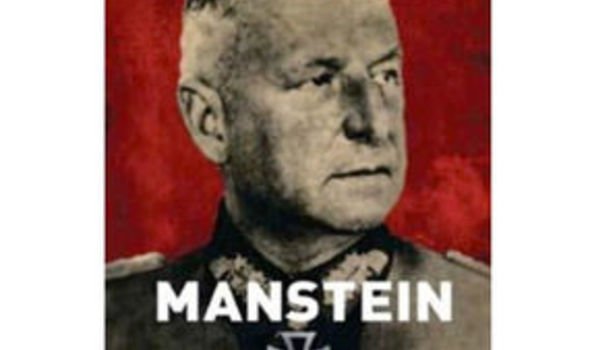
Today I'm including a link to a review of a new biography of Erich von Manstein, German Field Marshal, whom I consider perhaps the greatest of all German generals. I know a lot of you aren't World War Two buffs, but maybe you know someone who is. So that's below.
I also want to mention the World Book Market, however. That's one of the changes I spoke of. My website is actually up and running in a prototype way, complete with typo on the home page, and it's tied to the World Book Market. I'm taking down the ad for Biblio shortly and will be using the link directly to my website. Cool how that works, huh? Hopefully you'll be seeing your friendly neighborhood bookseller cropping up all over the place. Tell Chelsea Handler you want to see me as a guest on her show.
Now, the review.
New biography of Erich von Manstein

However at Kursk he disagreed with Hitler over the battle plan, preferring a “backhand” blow, drawing off the enemy in a feint and then smashing them in the flank, to the “forehand” stroke of an attack from existing positions.
Melvin grapples with the Manstein myth and gets the measure of the man.
“He was as bold tactically as Patton or Rommel but always kept the bigger operational picture foremost in his mind,” he says.
Manstein was put on trial for war crimes by a British military court in 1949. Assorted British generals and peers subscribed to pay for his defence with even Churchill donating £25 to the cause.
Out of 17 charges Manstein was convicted of nine. His 18-year sentence was reduced to 12 years but he was released early because Nato’s need for German rearmament during the Cold War required a veteran military figurehead.
Manstein helped plan the new German army and his ideas for battalion formation “became standardised within the German and British Armies by the Seventies”.
While keen to award Manstein recognition for his brilliance, however, Melvin does not let him off the hook.
The British court gave Manstein the benefit of the doubt over the gravest charges he faced but Melvin believes he was disingenuous in asserting that he had no knowledge of extermination operations by Himmler’s security police against suspected partisans, gypsies, commissars and Jews within the area of his command.
Manstein was a devout Christian who never joined the Nazi Party but he was too busy with his dazzling manoeuvres to let his conscience be troubled by the crimes of others in his backyard.
Weidenfeld & Nicolson, £30
Buy this and other titles at our bookshop, UK postage free: www.expressbookshop.co.uk
Today I'm including a link to a review of a new biography of Erich von Manstein, German Field Marshal, whom I consider perhaps the greatest of all German generals. I know a lot of you aren't World War Two buffs, but maybe you know someone who is. So that's below.
I also want to mention the World Book Market, however. That's one of the changes I spoke of. My website is actually up and running in a prototype way, complete with typo on the home page, and it's tied to the World Book Market. I'm taking down the ad for Biblio shortly and will be using the link directly to my website. Cool how that works, huh? Hopefully you'll be seeing your friendly neighborhood bookseller cropping up all over the place. Tell Chelsea Handler you want to see me as a guest on her show.
Now, the review.
New biography of Erich von Manstein
MANSTEIN: HITLER’S GREATEST GENERAL: MUNGO MELVIN
Manstein: Hitler’s Greatest General: Mungo Melvin
Friday May 14,2010
By Christopher Silvester

ERICH von Manstein is less famous to us than Rommel because no British troops ever faced an army under his command but his German contemporaries and Soviet rivals regarded him as the most brilliant of Hitler’s generals.
Promoted to the rank of field marshal at the age of 54 after his Eleventh Army won the little known and bitterly contested Crimea campaign in the summer of 1942, he was to play a crucial role in the war in the East until Hitler dismissed him as an army group commander 21 months later.
As Mungo Melvin, himself a former general, observes in this crisp, compelling book, the first full-scale biography of Manstein in English: “No other general served Hitler so well whilst disputing his military decisions so consistently.”
From a typical Prussian aristocratic military background Manstein was Gerd von Rundstedt’s chief of staff in the Polish campaign and was the architect of the Sichelschnitt (sickle-cut) plan for the defeat of Allied forces in Flanders and France, culminating in the encirclement of our troops at Dunkirk.
When it came to Operation Barbarossa, the German invasion of the Soviet Union, Manstein saw the strategic priority as the defeat of the Red Army, whereas Hitler thought in terms of political and economic objectives such as Leningrad, the Donets Basin industrial region of the Ukraine and the oilfields of the Caucasus.
Unlike Hitler, Manstein favoured, in his own words, “the conception of a subtle fencer who knows how to make an occasional step backwards in order to lunge for the decisive thrust”.
Following the disaster of Stalingrad Manstein conducted a masterly counter-offensive based on this principle, comprising two sequential battles.
However at Kursk he disagreed with Hitler over the battle plan, preferring a “backhand” blow, drawing off the enemy in a feint and then smashing them in the flank, to the “forehand” stroke of an attack from existing positions.
Melvin grapples with the Manstein myth and gets the measure of the man.
“He was as bold tactically as Patton or Rommel but always kept the bigger operational picture foremost in his mind,” he says.
Manstein was put on trial for war crimes by a British military court in 1949. Assorted British generals and peers subscribed to pay for his defence with even Churchill donating £25 to the cause.
Out of 17 charges Manstein was convicted of nine. His 18-year sentence was reduced to 12 years but he was released early because Nato’s need for German rearmament during the Cold War required a veteran military figurehead.
Manstein helped plan the new German army and his ideas for battalion formation “became standardised within the German and British Armies by the Seventies”.
While keen to award Manstein recognition for his brilliance, however, Melvin does not let him off the hook.
The British court gave Manstein the benefit of the doubt over the gravest charges he faced but Melvin believes he was disingenuous in asserting that he had no knowledge of extermination operations by Himmler’s security police against suspected partisans, gypsies, commissars and Jews within the area of his command.
Manstein was a devout Christian who never joined the Nazi Party but he was too busy with his dazzling manoeuvres to let his conscience be troubled by the crimes of others in his backyard.
Weidenfeld & Nicolson, £30
Buy this and other titles at our bookshop, UK postage free: www.expressbookshop.co.uk
Friday, April 30, 2010
How can I take this seriously?
Good morning bookies. Sorry for the absence once again, life gets a bit wacky sometimes. West Tennessee is supposed to get something like 10" of rain this weekend. Oh boy, where are my floaties?
Today is April 30th, 65 years to the day since Adolf Hitler committed suicide in Berlin. I mention this because today's BBC article focuses on this event with reviews of two books written by Germans who fought for the English in WW2. The article would probably be quite interesting, except it is so riddled with factual errors that it's hard to take it seriously. I had heard that the BBC's journalistic integrity was shot, this seems to confirm this.
Two errors off the top that even cursory students of the war would know: first this sentence, "He had written them on 29 April earlier that year, then committed suicide, probably on 30 April - the exact date remains uncertain."
It does? Where and who, exactly, are debating that he killed himself on April 30th? Every known and credible historian or witness verifies this, there is and never had been debate about this, unless you think aliens whisked him off to Argentina. I have no idea what this guy is talking about. Then, second, there is the well known photo from a brief newsreel of Hitler decorating some Hitler Youth on April 20th, his birthday, in the garden of the New Reichs Chancellery. What's more, we even have the names of some of the boys. This was ten days before he killed himself. Yet the photo bears the caption: "Hitler made his wills and died some two months after this image was taken." Not two months, ten days. Any student of World War II would know that. And if you didn't know that, it's worse, because you would believe this nonsense.
The tipoff should have come at the beginning of the article with the very poorly colorized photo at top. It looks like a 5 year old took crayons to somebody's photo of Hitler on a street.
Well, anyway, for those interested in the books, and they sound fascinating, don't be put off by the remarkably bad article.
Two new books on Hitler by German anti-Nazis
Today is April 30th, 65 years to the day since Adolf Hitler committed suicide in Berlin. I mention this because today's BBC article focuses on this event with reviews of two books written by Germans who fought for the English in WW2. The article would probably be quite interesting, except it is so riddled with factual errors that it's hard to take it seriously. I had heard that the BBC's journalistic integrity was shot, this seems to confirm this.
Two errors off the top that even cursory students of the war would know: first this sentence, "He had written them on 29 April earlier that year, then committed suicide, probably on 30 April - the exact date remains uncertain."
It does? Where and who, exactly, are debating that he killed himself on April 30th? Every known and credible historian or witness verifies this, there is and never had been debate about this, unless you think aliens whisked him off to Argentina. I have no idea what this guy is talking about. Then, second, there is the well known photo from a brief newsreel of Hitler decorating some Hitler Youth on April 20th, his birthday, in the garden of the New Reichs Chancellery. What's more, we even have the names of some of the boys. This was ten days before he killed himself. Yet the photo bears the caption: "Hitler made his wills and died some two months after this image was taken." Not two months, ten days. Any student of World War II would know that. And if you didn't know that, it's worse, because you would believe this nonsense.
The tipoff should have come at the beginning of the article with the very poorly colorized photo at top. It looks like a 5 year old took crayons to somebody's photo of Hitler on a street.
Well, anyway, for those interested in the books, and they sound fascinating, don't be put off by the remarkably bad article.
Two new books on Hitler by German anti-Nazis
Saturday, March 27, 2010
FREE AGENT by Jeremy Duns
It's the weekend, bookies, what are you doing reading this blog when you should be outside enjoying the spring weather? Anyway, here's another review for those of you who can't get enough of my scintillating prose. If you like spy novels, this one should get your attention.
FREE AGENT by Jeremy Duns
Spy novels are supposed to be paranoid, claustrophobic affairs. Who do you trust? Who is lying, who isn’t? When is the author misleading you? Half the fun is trying to figure out what’s really going on. At least, that’s how spy novels unfold when they are done right. And so, it’s quite the compliment to say that with Jeremy Duns’ first novel, Free Agent, it’s quite a while before the reader has a clue to what is really happening.
Paul Dark is a young and eager officer in MI6 when World War II comes to a close; his father is also an officer, and while no longer young he is certainly eager to keep killing. When he recruits his son to help it seems like a straight forward proposition: assassinate Nazis before they can escape, a top secret assignment no one must ever know about. Then the father is killed, murdered, and Paul finds himself being recruited by the Russians.
Twenty-five years later a Russian KGB officer wants to defect, offering details of a British officer recruited by his forerunners right after the end of World War II. Is Paul the double agent? It certainly seems so, and in short order he is running from both the KGB and MI6.
Paul Dark is no knight in shining armor, however. He can kill without compunction, even those he has known and liked for years. And he does. Like the best of his predecessors, the author knows that in the shadow world of spies and counter-spies, no one is ever wholly good and no one wholly evil. So it is with Paul Dark. He’s the protagonist, but calling him a hero might be stretching things.
The author’s style is fast, dialogue clipped. The characters’ internal realities are all strictly maintained, meaning that the reader who pays attention will pick up small details that reinforce the reality and move the story. It’s a fast, well thought out debut. And fortunately there are more on the way.
FREE AGENT by Jeremy Duns
Spy novels are supposed to be paranoid, claustrophobic affairs. Who do you trust? Who is lying, who isn’t? When is the author misleading you? Half the fun is trying to figure out what’s really going on. At least, that’s how spy novels unfold when they are done right. And so, it’s quite the compliment to say that with Jeremy Duns’ first novel, Free Agent, it’s quite a while before the reader has a clue to what is really happening.
Paul Dark is a young and eager officer in MI6 when World War II comes to a close; his father is also an officer, and while no longer young he is certainly eager to keep killing. When he recruits his son to help it seems like a straight forward proposition: assassinate Nazis before they can escape, a top secret assignment no one must ever know about. Then the father is killed, murdered, and Paul finds himself being recruited by the Russians.
Twenty-five years later a Russian KGB officer wants to defect, offering details of a British officer recruited by his forerunners right after the end of World War II. Is Paul the double agent? It certainly seems so, and in short order he is running from both the KGB and MI6.
Paul Dark is no knight in shining armor, however. He can kill without compunction, even those he has known and liked for years. And he does. Like the best of his predecessors, the author knows that in the shadow world of spies and counter-spies, no one is ever wholly good and no one wholly evil. So it is with Paul Dark. He’s the protagonist, but calling him a hero might be stretching things.
The author’s style is fast, dialogue clipped. The characters’ internal realities are all strictly maintained, meaning that the reader who pays attention will pick up small details that reinforce the reality and move the story. It’s a fast, well thought out debut. And fortunately there are more on the way.
Monday, March 22, 2010
WICKED BREAK by Jeff Shelby
Hiya bookies! Some books stick with you long after you read them, and so it is with today's review. It wasn't great literature or anything, but it was fast and well written. The author wasn't trying to be Raymond Chandler, he was just trying to tell a story.
WICKED BREAK by Jeff Shelby
Noah Braddock is minding his own business in the surf off of Mission Beach, California, riding the swells and forgetting the stresses of life as a P.I. He sees the man on the beach watching him, feeling in his gut it’s about a case and not wanting any part of whatever the man wants. But money is money and bills don’t pay themselves.
Peter Pluto’s brother is missing. Linc Pluto is a college student who took their mother’s recent death from cancer quite hard and has dropped out of sight. Worried, Peter wants to make sure all is well. A mutual friend sent him to Noah. A missing person’s case doesn’t seem too threatening so Noah takes the money and the case. Bad choice.
Linc isn’t what he seems to be and Peter doesn’t survive long enough for Noah to question him further. Indeed, it’s when he tries to do find out what Peter isn’t telling him that he almost winds up dead himself, right next to what is left of Peter Pluto. Beaten to a pulp by the same skinheads who killed Pluto, Noah enlists the help his giant friend Carter, (think defensive end with more propensity for violence), and vows to find Linc and get even with those who attacked him.
The author is mining familiar territory in Wicked Break. The young, brash but reluctant P.I. who lives by his own rules; Carter, the tough, deux-ex-machina sidekick who does the dirty work and enjoys it; gangsters, gangsters’ tough-but-loveable women-folk, Nazis, shootouts, ex-girlfriends. All of the classic elements of the P.I. novel are here. And yet, as unoriginal as this all may seem, Wicked Break works beautifully because the author knows exactly what he’s doing. The prose is sharp and fast, the dialogue tough but real, the characters defined. In short, what has always made P.I. novels work well is on display in this book.
If you like other contemporary authors such as Steve Hamilton, Harlan Coben or Robert Crais, it’s almost a sure bet you’ll find Noah Braddock and Carter as welcome as old friends you’ve just never met before.
WICKED BREAK by Jeff Shelby
Noah Braddock is minding his own business in the surf off of Mission Beach, California, riding the swells and forgetting the stresses of life as a P.I. He sees the man on the beach watching him, feeling in his gut it’s about a case and not wanting any part of whatever the man wants. But money is money and bills don’t pay themselves.
Peter Pluto’s brother is missing. Linc Pluto is a college student who took their mother’s recent death from cancer quite hard and has dropped out of sight. Worried, Peter wants to make sure all is well. A mutual friend sent him to Noah. A missing person’s case doesn’t seem too threatening so Noah takes the money and the case. Bad choice.
Linc isn’t what he seems to be and Peter doesn’t survive long enough for Noah to question him further. Indeed, it’s when he tries to do find out what Peter isn’t telling him that he almost winds up dead himself, right next to what is left of Peter Pluto. Beaten to a pulp by the same skinheads who killed Pluto, Noah enlists the help his giant friend Carter, (think defensive end with more propensity for violence), and vows to find Linc and get even with those who attacked him.
The author is mining familiar territory in Wicked Break. The young, brash but reluctant P.I. who lives by his own rules; Carter, the tough, deux-ex-machina sidekick who does the dirty work and enjoys it; gangsters, gangsters’ tough-but-loveable women-folk, Nazis, shootouts, ex-girlfriends. All of the classic elements of the P.I. novel are here. And yet, as unoriginal as this all may seem, Wicked Break works beautifully because the author knows exactly what he’s doing. The prose is sharp and fast, the dialogue tough but real, the characters defined. In short, what has always made P.I. novels work well is on display in this book.
If you like other contemporary authors such as Steve Hamilton, Harlan Coben or Robert Crais, it’s almost a sure bet you’ll find Noah Braddock and Carter as welcome as old friends you’ve just never met before.
Sunday, March 21, 2010
THE INVISIBLE by Andrew Britton
Good morning bookies! Your friendly neighborhood bookseller is pretty tired today. He spent most of yesterday and into the wee hours this morning helping someone move, waking up to rain and cold weather. Yesterday's high was 71, tonight we may have snow, Wednesday back into the low 70's. West Tennessee weather is rarely dull.
Before posting today's review, I should explain the format for most of these. Right now the reviews I'm putting up were mostly done for iloveamysterynewsletter.com. They all need to be of a certain length, I generally shoot for 300-400 words. Given that, there isn't time to do major in-depth examination, and I don't want to give away major plot points, so instead I shoot for an overall feel of the author and his/her work. Sometimes I get there, sometimes not, that's for you to judge.
THE INVISIBLE by Andrew Britton
Ryan Kealey has had enough. After almost being killed thwarting a terrorist attack in New York City, an attack that wounded his girlfriend and estranged the pair, he disappeared into the wildernesses of the world, seeking solitude and maybe even peace. The shadow world of the CIA was no longer his and he was glad.
Except that’s not how things work when you are a highly trained operative. In the Kashmir region of Pakistan a busload of western adventurers has gone missing, kidnapped, followed quickly by a violent attack on the motorcade of the US Secretary of State who had come to discuss measures to retrieve the hostages. The US ambassador is killed and the Secretary is also in the hands of the terrorists. But the Pakistanis are not happy with the US over an arms deal with India and their cooperation is lukewarm, at best. What is needed is a small team of experts to covertly infiltrate Pakistan and find the Secretary. What is needed is Ryan Kealey.
Given the chance to re-unite with his girlfriend, Naomi, on the mission, Kealey signs on and gets to work. But there are things he doesn’t know and other things he wasn’t told, things that might get him and his team killed, and he’s not happy about it. A fact-finding mission to Spain leads to a much higher price than anyone had anticipated.
The action is realistic, the characters well though out and the locales quite believable. For those who love the genre of action thrillers, Britton is certainly a new voice that commands attention. One might wish for some judicious editing, the descriptions do occasionally bog down in unnecessary detail, but that’s a quibble. The Invisible is an entertaining read with thought-provoking overtones, which is exactly what you would hope for.
Before posting today's review, I should explain the format for most of these. Right now the reviews I'm putting up were mostly done for iloveamysterynewsletter.com. They all need to be of a certain length, I generally shoot for 300-400 words. Given that, there isn't time to do major in-depth examination, and I don't want to give away major plot points, so instead I shoot for an overall feel of the author and his/her work. Sometimes I get there, sometimes not, that's for you to judge.
THE INVISIBLE by Andrew Britton
Ryan Kealey has had enough. After almost being killed thwarting a terrorist attack in New York City, an attack that wounded his girlfriend and estranged the pair, he disappeared into the wildernesses of the world, seeking solitude and maybe even peace. The shadow world of the CIA was no longer his and he was glad.
Except that’s not how things work when you are a highly trained operative. In the Kashmir region of Pakistan a busload of western adventurers has gone missing, kidnapped, followed quickly by a violent attack on the motorcade of the US Secretary of State who had come to discuss measures to retrieve the hostages. The US ambassador is killed and the Secretary is also in the hands of the terrorists. But the Pakistanis are not happy with the US over an arms deal with India and their cooperation is lukewarm, at best. What is needed is a small team of experts to covertly infiltrate Pakistan and find the Secretary. What is needed is Ryan Kealey.
Given the chance to re-unite with his girlfriend, Naomi, on the mission, Kealey signs on and gets to work. But there are things he doesn’t know and other things he wasn’t told, things that might get him and his team killed, and he’s not happy about it. A fact-finding mission to Spain leads to a much higher price than anyone had anticipated.
The action is realistic, the characters well though out and the locales quite believable. For those who love the genre of action thrillers, Britton is certainly a new voice that commands attention. One might wish for some judicious editing, the descriptions do occasionally bog down in unnecessary detail, but that’s a quibble. The Invisible is an entertaining read with thought-provoking overtones, which is exactly what you would hope for.
Friday, March 19, 2010
It's Friday already? How about another review? OUT OF RANGE by C.J. Box
Good morning bookies! The sun is shining in West Tennessee today, a high of 72 expected, with the high Sunday going to hit all of 45. In between? Storms. Don't be surprised if your friendly neighborhood bookseller's house does a Wizard of Oz thing and goes spinning off into the stratosphere. Anyway, none of the news from the book world seemed exciting, so here's another review to keep you occupied.
OUT OF RANGE by C.J. Box
“Before going outside to his pickup for his gun, the Wyoming game warden cooked and ate four and a half pounds of meat.” This first line from ‘Out of Range’ by C.J. Box pretty much sums up the writer’s outlook on telling a story: get to the meat of the story (pun intended) and forget the fancy trimmings. And so he does in this fifth installment in the increasingly popular series about game warden and detective Joe Pickett.
Pickett is happy enough in his hometown of Saddlestring. His mother-in-law is getting married, and to a rich local rancher no less, he and his wife are making plans and generally enjoying life. Then comes word that his friend and fellow warden Will Jensen has committed suicide and Pickett is needed to fill in at Jensen’s post in Jackson until a permanent replacement can be found. But Jackson isn’t like Saddlestring and suicide just might be murder.
Before he knows it, Pickett is in the middle of some powerful people with layered agendas, both open and secret, environmentalists at all levels of commitment, the obscenely rich who are used to being obeyed and, not least, a beautiful (but married) lady who catches Pickett’s eye. But if a murdered is afoot, as seems likely, who is it and has done an out-of-his-element Pickett find the culprit?
C.J. Box never fails to entertain the reader and his straight forward style is ideal for a series based in the open west, where long descriptions are just as useless as short ones for describing the wonders of the area, where the people don’t talk much and make sure they say something when they do. Out of Range continues a series the reader has come to rely on for originality and style, and it no way does it disappoint.
OUT OF RANGE by C.J. Box
“Before going outside to his pickup for his gun, the Wyoming game warden cooked and ate four and a half pounds of meat.” This first line from ‘Out of Range’ by C.J. Box pretty much sums up the writer’s outlook on telling a story: get to the meat of the story (pun intended) and forget the fancy trimmings. And so he does in this fifth installment in the increasingly popular series about game warden and detective Joe Pickett.
Pickett is happy enough in his hometown of Saddlestring. His mother-in-law is getting married, and to a rich local rancher no less, he and his wife are making plans and generally enjoying life. Then comes word that his friend and fellow warden Will Jensen has committed suicide and Pickett is needed to fill in at Jensen’s post in Jackson until a permanent replacement can be found. But Jackson isn’t like Saddlestring and suicide just might be murder.
Before he knows it, Pickett is in the middle of some powerful people with layered agendas, both open and secret, environmentalists at all levels of commitment, the obscenely rich who are used to being obeyed and, not least, a beautiful (but married) lady who catches Pickett’s eye. But if a murdered is afoot, as seems likely, who is it and has done an out-of-his-element Pickett find the culprit?
C.J. Box never fails to entertain the reader and his straight forward style is ideal for a series based in the open west, where long descriptions are just as useless as short ones for describing the wonders of the area, where the people don’t talk much and make sure they say something when they do. Out of Range continues a series the reader has come to rely on for originality and style, and it no way does it disappoint.
Thursday, March 18, 2010
CHILD 44 by Tom Rob Smith
Hiya bookies. Today's review is for one of the seminal books of the last 10 years. If you haven't read Child 44, it's your loss. I hope you enjoy my review.
CHILD 44 by Tom Rob Smith.
There is no crime. Not in Stalin’s USSR of 1953. The Soviet society is so perfect, so ideal, that there is no reason for crime and therefore it follows that crime does not exist. Which makes it very hard to catch criminals.
Leo Demidov is an officer of the MGB, the State Security Police, a prestigious job that requires him to hunt down and arrest traitors and spies. And while there might not be crime in the Soviet Union, there are lots and lots of traitors to the Revolution. They can be anyone, anywhere, and treason may be nothing more than a momentary lapse in revolutionary zeal, a thought, a doubt, that betrays independent thought that works against the common good. Protecting the state from such deadly internal enemies is Leo’s job, and Leo is very, very good at his job. Too good, as it turns out.
Two vignettes, seemingly unrelated to the following plot, should not be ignored. A boy disappears in the forest while chasing a cat during the years of collectivization, when millions of Russian citizens were intentionally starved to death. The cat isn’t his pet, it’s to be his dinner. Later, in Moscow, two brothers have a snowball fight that turns ugly.
Like all truly great thrillers, the place and time are as much a character as Leo, or his wife Raisa, or his commander. The paranoia of the times pervades all. A mis-spoken word isn’t necessary to condemn a person; a glance at the wrong moment at the wrong person is plenty to bring a death sentence. Life is lived knowing that no one has rights and at any moment a sinister knock may bring twenty years in the gulag. There is no color here, only gray, bleak and cheerless.
And the criminal that does not exist, the one Leo becomes obsessed with catching, is a serial killer of children. Unless this man is a spy, or perhaps unbalanced or homosexual and therefore outside the norms of Soviet society, unless there is a reason for his actions, then having a criminal in their midst contravenes the rules of the state. In turn, that means the state can be wrong, which is not possible. So it must be subversion.
Child 44 is a riveting story in itself, but it is also a story that teaches while keeping the reader glued to their seat. There is very little dialogue here, and at first it can be annoying. But as the pages turn the reader realizes that in Soviet Russian the spoken word was precious, people never spoke their mind and so speech was innocuous, meaningless. What dialogue there is becomes special, cherished. A neat trick by a new author, from whom one can only expect great things.
CHILD 44 by Tom Rob Smith.
There is no crime. Not in Stalin’s USSR of 1953. The Soviet society is so perfect, so ideal, that there is no reason for crime and therefore it follows that crime does not exist. Which makes it very hard to catch criminals.
Leo Demidov is an officer of the MGB, the State Security Police, a prestigious job that requires him to hunt down and arrest traitors and spies. And while there might not be crime in the Soviet Union, there are lots and lots of traitors to the Revolution. They can be anyone, anywhere, and treason may be nothing more than a momentary lapse in revolutionary zeal, a thought, a doubt, that betrays independent thought that works against the common good. Protecting the state from such deadly internal enemies is Leo’s job, and Leo is very, very good at his job. Too good, as it turns out.
Two vignettes, seemingly unrelated to the following plot, should not be ignored. A boy disappears in the forest while chasing a cat during the years of collectivization, when millions of Russian citizens were intentionally starved to death. The cat isn’t his pet, it’s to be his dinner. Later, in Moscow, two brothers have a snowball fight that turns ugly.
Like all truly great thrillers, the place and time are as much a character as Leo, or his wife Raisa, or his commander. The paranoia of the times pervades all. A mis-spoken word isn’t necessary to condemn a person; a glance at the wrong moment at the wrong person is plenty to bring a death sentence. Life is lived knowing that no one has rights and at any moment a sinister knock may bring twenty years in the gulag. There is no color here, only gray, bleak and cheerless.
And the criminal that does not exist, the one Leo becomes obsessed with catching, is a serial killer of children. Unless this man is a spy, or perhaps unbalanced or homosexual and therefore outside the norms of Soviet society, unless there is a reason for his actions, then having a criminal in their midst contravenes the rules of the state. In turn, that means the state can be wrong, which is not possible. So it must be subversion.
Child 44 is a riveting story in itself, but it is also a story that teaches while keeping the reader glued to their seat. There is very little dialogue here, and at first it can be annoying. But as the pages turn the reader realizes that in Soviet Russian the spoken word was precious, people never spoke their mind and so speech was innocuous, meaningless. What dialogue there is becomes special, cherished. A neat trick by a new author, from whom one can only expect great things.
Subscribe to:
Posts (Atom)

 Posts
Posts

